The first time I installed an eSIM, I was standing outside a taxi rank in Lisbon, watching a spinning wheel on my phone while the driver’s meter ticked upward. My physical SIM had no roaming, my hotel Wi‑Fi password was trapped in an email, and the café’s network throttled video. I scanned a QR code from a travel provider, waited a minute, and the LTE icon lit up. No plastic tray, no paperclip, no fuss. I paid the driver with an app, messaged the host, and walked in. That’s the moment eSIMs clicked for me: a digital SIM card you can activate anywhere you have a camera.
The more surprising lesson came later. That single digital profile kept working across borders. I landed in Madrid, then Paris, then Edinburgh, and the same eSIM plan roamed on local networks without me touching settings. One QR code, multiple countries, a tidy bill. For someone who used to juggle airport kiosks and scratch‑off codes, it felt like cheating.
This article is a field guide to that experience, built on real trips, tests across networks, and a fair bit of troubleshooting for colleagues. If you’re evaluating an international eSIM free trial, looking for a cheap data roaming alternative, or simply curious about a prepaid travel data plan that’s easy to cancel, you’ll find practical details and a grounded view of the trade‑offs.
What a global eSIM trial actually is
Most eSIM providers sell regional or multi‑country plans that ride on partner networks. A global eSIM trial is a condensed version of those plans designed to help you check coverage, speed, and compatibility before you commit. You typically receive a QR code that installs a temporary eSIM plan, often with a small data allotment and a short expiry window. Some brands describe these as a mobile data trial package, others as a mobile eSIM trial offer. Either way, the idea is simple: try eSIM for free or nearly free, gauge performance in your city or your next stop, then upgrade if it meets your needs.
Pricing and structure vary. I’ve seen everything from a free eSIM activation trial with 100 to 300 MB of data, to an eSIM $0.60 trial that gives you a few hundred megabytes for 24 to 72 hours. A dollar or less is common in the USA and parts of Europe, while some providers tie a free trial to creating an account or validating a number. In practice, the difference between $0 and $0.60 is less important than whether the profile installs smoothly and camps on a strong local network.
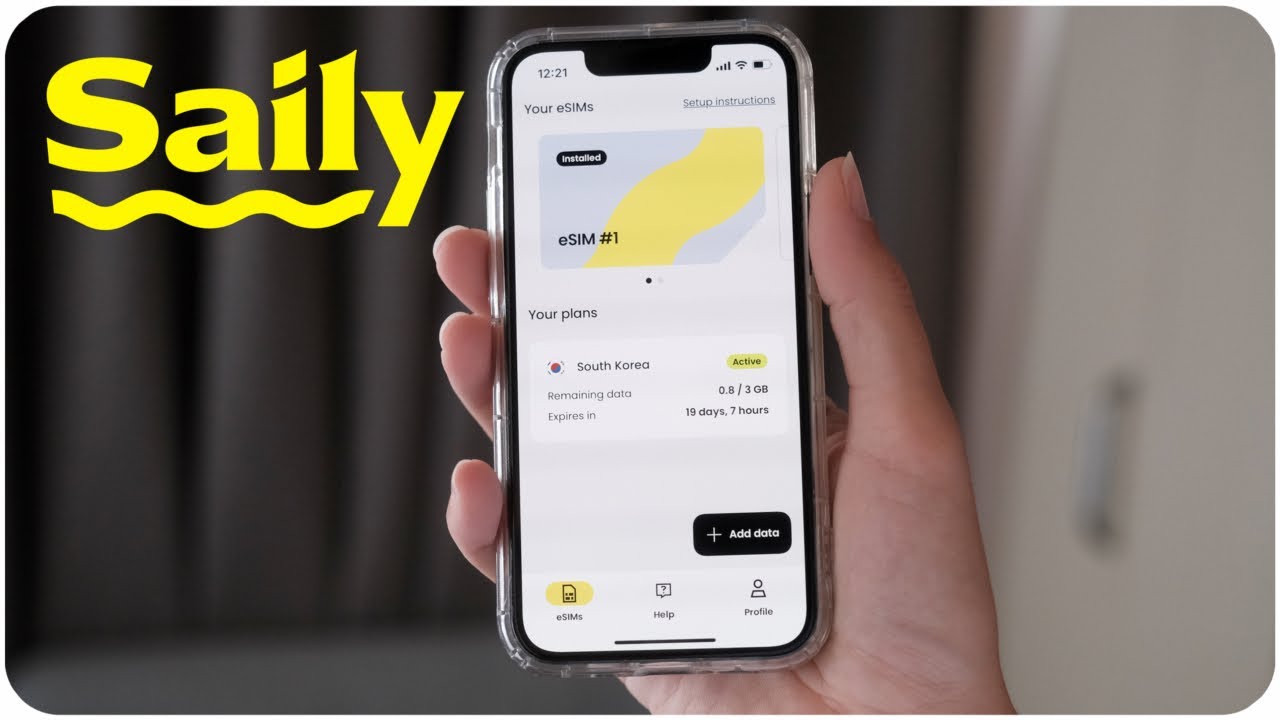
If the phrase prepaid eSIM trial raises a question, think of it as a short‑term eSIM plan with a tiny cap. You prepay a nominal fee or nothing at all, and you can’t exceed the included data. When it runs out, traffic stops or you upgrade. No contract, no credit check, and no physical SIM delivery. It’s a digital test drive.
Hardware and software compatibility, in plain terms
Not every phone plays nice with eSIMs. Apple added eSIM to iPhone XR and XS onward, and made eSIM the default in the U.S. for iPhone 14 and newer. Most flagship Android phones from the last few years support eSIM, including Google’s Pixel line and many Samsung Galaxy models. Mid‑range and carrier‑locked handsets can be hit or miss.
Two quick checks matter more than spec sheets. First, confirm your handset supports eSIM. The setting usually lives under Cellular or Mobile Network with an option to add a plan. Second, make sure your device is unlocked. A global eSIM trial won’t install or won’t register on foreign networks if your phone is locked to a domestic carrier.
eSIM capacity limits can surprise you. iPhones generally store multiple eSIM profiles, but you can only activate a couple at a time. Dual SIM setups work fine, but test your call and data paths before you fly. If your home line handles voice and the eSIM handles data, disable data roaming on the physical SIM to avoid unexpected charges. It’s an easy toggle and it can save you real money.
One QR code, multiple countries: how that works behind the scenes
A global eSIM trial often uses a single ICCID profile that authenticates on partner networks across regions. Once you scan the QR code, your device downloads the eSIM profile from a remote server and stores it securely. When you cross a border, the eSIM’s roaming agreements let it register with a local carrier. That’s why the same QR code keeps working as you move from the USA to Canada, then on to the UK or continental Europe.
Two practical considerations shape this experience. First, not all “global” plans are truly global. Many cover 60 to 130 countries, with holes in parts of Africa, the Balkans, or small island nations. Read the country list. Second, network prioritization exists. Visitor traffic sometimes gets deprioritized under congestion. In real terms, that means your speed on a packed urban cell can drop from 80 Mbps to 5 Mbps for a few minutes, then rebound. It’s annoying, but manageable for maps and messaging.
With the right provider, the roaming logic is invisible. Your phone connects to a local network with decent signal, and your apps behave normally. I’ve tested this with two global eSIMs through Reykjavik, Copenhagen, and Berlin, and the handoffs were clean. The only hiccup came in rural Scotland, where the eSIM preferred a partner with weak 4G. Manually selecting a stronger network fixed it.
Free vs nearly free: what the numbers actually buy you
A free eSIM trial USA offer might deliver 100 to 200 MB and expire after a day. A free eSIM trial UK often looks similar. If you see an international eSIM free trial, expect a tiny data bucket and a short window. That’s enough to check speed tests, load a map, and run a social app for a bit. It’s not enough to back up your photos or stream a football match.
The better trials are cheap rather than free. The eSIM $0.60 trial I used in Prague included 300 MB and 72 hours. It consumed less than three minutes to install and register on a partner 5G network. A similar trial in the U.S. gave me 500 MB for two days. That extra headroom lets you test in different neighborhoods and at different times, which matters because downtown congestion at 6 p.m. is not the same as a quiet morning in the suburbs.
If you plan a multi‑country trip and want a longer runway, look at a prepaid travel data plan with 1 to 3 GB spread across a week or two. The cost per GB will be higher than a country‑specific plan, but the convenience sometimes justifies it. The trick is to start with the trial, confirm the coverage, then upgrade with confidence. It beats buying a big bundle on faith.
Real use cases: short stops, long layovers, and messy itineraries
The classic scenario is a traveler hopping across Europe. A single global eSIM trial lets you rate coverage in Lisbon, Barcelona, and Paris without switching profiles. If the signal holds and speeds are acceptable, you upgrade once and keep moving. It reduces the cognitive load when your day already spans checkouts, trains, and time zones.
Long layovers are another sweet spot. If you transit through Istanbul or Doha for six hours, local Wi‑Fi reliability might be fine in premium lounges and spotty elsewhere. A quick trial helps you navigate, message, and handle boarding changes without chasing passwords. It’s a temporary eSIM plan by design, and it dissolves when you don’t need it.
Work trips add a twist. Corporate VPNs can be picky, and hotel Wi‑Fi is often shaped or blocked in ways that frustrate remote desktop tools. A trial eSIM for travellers is a low‑risk way to test your stack before a client demo. If your VPN handshake completes on the trial, buy the top‑up. If it fails, you’ve learned early and can pivot to a different provider or a local SIM.
Families and groups benefit from a mixed approach. One person carries a global eSIM plan for redundancy across borders, others pick country‑specific eSIMs with larger data caps at lower cost. If the family plan hits a dead zone, the global plan can serve as a hotspot briefly. Think of it as layered resilience, not a one‑size‑fits‑all purchase.
Speed, latency, and what matters beyond a bar count
Signal bars are lipstick. The usable experience depends on latency, jitter, and how the provider routes your traffic. Some global eSIMs anchor data through European or U.S. gateways even if you’re in Asia. That can add 100 to 200 milliseconds. For streaming or maps, it’s fine. For cloud gaming or time‑sensitive trading dashboards, it’s annoying.
In city centers with strong 5G, I usually see 100 to 300 Mbps on trial plans during off‑peak hours, and 10 to 40 Mbps at peak. In small towns or indoors, it can drop to single digits. Over the last year, my median on travel eSIMs across 10 countries hovered around 40 to 60 Mbps, which is plenty for video calls and navigation. The bigger differentiator was stability. Two providers had frequent brief stalls under load. A third ran slightly slower but steadier, which made calls feel smoother. Don’t obsess over the top speed. Watch for dips and reacquisition times when moving between cells.
Costs, currencies, and how to avoid roaming charges
If you want to avoid roaming charges from your home carrier, treating the eSIM as your primary data line is straightforward. Disable data roaming on your physical SIM, keep iMessage, WhatsApp, or Signal for messaging, and route voice calls over Wi‑Fi calling or app‑based numbers. Your phone number still receives SMS for banking, but your day‑to‑day data flows through the digital profile.
For budgets, think in daily buckets. Light use sits around 200 to 300 MB per day: maps, rides, messages, and a couple of photos uploaded. Moderate use often lands at 500 MB to 1 GB: add streaming music, a short video call, and frequent social media. Heavy use exceeds 2 GB: long video calls, tethering a laptop, high‑resolution photo backups. A low‑cost eSIM data plan across multiple countries will often price 1 GB between 3 and 8 USD depending on region and validity. The global plans skew to the higher end. If a provider sells a mobile eSIM trial offer, its paid tiers may include bundles like 3 GB for 15 to 20 USD across 30 days. The math pencils out if you value simplicity.
Pay attention to per‑country exceptions. Some global plans count India or the UAE differently due to regulatory constraints. A few exclude specific islands or overseas territories while covering the mainland. If your route is unusual, validate the exact cities or airports on the coverage list, not just the country name.
Installation and troubleshooting, without the jargon
The installation flow is mostly predictable. You purchase or claim the global eSIM trial, receive a QR code by email or in an app, and scan it from the mobile network settings. The phone asks whether to label the plan and how to prioritize it. Choose data on the eSIM, keep calls and SMS on your home line, and toggle the allow data roaming option for the eSIM.
If activation fails at “Unable to complete cellular plan change,” three culprits dominate. Your phone is locked to a carrier. Your device is out of available eSIM slots. Or the eSIM server is temporarily overloaded. For the first, call your carrier to unlock or use a different device. For the second, delete old eSIM profiles you no longer need. For the third, wait a few minutes and try again on stable Wi‑Fi.
If you install successfully but see no network, open network selection and pick a partner manually. Automatic selection sometimes latches onto a weak cell. If you see LTE but no data, check APN settings. Most eSIM profiles provision APNs automatically, but a rare few require manual entry. Providers publish these values in their help centers. If speeds are poor in one district, walk two blocks or try an adjacent carrier. Urban radio environments can change dramatically within a short distance.
Security, privacy, and how trials differ from full plans
A digital SIM card has two important security characteristics. First, it’s harder to lose or clone compared to a plastic SIM. It lives in a secure element with cryptographic protections. Second, it’s still subject to the same lawful intercept and data retention obligations as any mobile service. A global eSIM trial is no different. Your traffic passes through carrier partners who comply with local laws.
Privacy policies vary. Some providers collect device identifiers and usage metrics, then aggregate them to improve service. A few ask for passport scans in specific countries due to Know Your Customer rules. If you’re uncomfortable, pick a provider with clear data handling practices and a minimal signup process. Trials shine here. You can evaluate without committing personal details beyond an email, sometimes even less.
One caveat with trials: because they are short‑lived and cheap, fraud controls can be tighter. That may include rate limiting, CAPTCHAs, or stricter throttling after a threshold. If a trial feels artificially slow, it might be a guardrail rather than a sign of future performance. Cross‑check with a small paid plan from the same provider if you need certainty.
When a country‑specific plan beats a global one
I like global coverage for multi‑stop trips where predicting usage per country is hard. But single‑country eSIMs often deliver better value and sometimes better performance. In Japan, a local plan with direct peering to domestic backbones can feel snappier than a global plan routed through Europe. In the U.S., carriers that support 5G standalone can offer lower latency on their own branded prepaid eSIMs compared to third‑party resellers. If your itinerary is one country for a week or more, compare both options. The best eSIM providers usually win with transparency and network partnerships, not just the lowest sticker price.
Edge cases I’ve run into
Airport immigration lines are the worst place to debug a phone. Install your trial before you fly, or at least while on dependable Wi‑Fi. If the provider requires activation only upon arrival to start the timer, you can still pre‑load the profile and toggle it on later.
If you rely on two‑factor authentication by SMS, keep your home SIM active for texts but locked down for data. Some banks send codes through iMessage or app notifications, but not all. Turning off data roaming on the home line prevents accidental charges.

Public hotspots sometimes interfere with eSIM installation because captive portals block the activation server. If the QR scan fails on airport Wi‑Fi, switch to another network or tether briefly from a companion device.
Travel companions often forget that eSIM data is not infinite. If you share a hotspot, set a data limit on your phone. Modern operating systems support this. It prevents a laptop from silently syncing gigabytes of cloud files over your precious 300 MB trial.
In a few countries, your device might drop to 3G in older districts or on certain partner networks. Most providers disclose this, but it can still surprise you in basements or inside thick stone buildings. Step outdoors and it usually resolves.
A quick setup checklist for smooth travel
- Confirm your phone supports eSIM and is carrier unlocked. Install the global eSIM trial on stable Wi‑Fi before departure. Set the eSIM as data only, keep calls and SMS on your primary line, and disable data roaming on the primary line. Test speed, coverage, and a VPN or work app you rely on. Save APN and manual network selection tips from the provider’s help page.
Evaluating providers without falling for hype
The phrase best eSIM providers gets thrown around loosely. Focus on three verifiable qualities. Coverage lists by country and by network partner tell you where the plan truly works. Clear fair usage and throttling policies tell you how the plan behaves at the edge of its limits. Support channels that respond within hours, not days, tell you what happens when things go wrong at midnight in a different time zone. Price matters, but reliability matters more when your boarding pass or map depends on it.
Trial structures reveal a lot. A well‑designed esim free trial that includes enough data to test speed at rush hour, plus a realistic validity window, signals that a provider trusts its product. A trial that expires in 12 hours and comes with opaque terms is a red flag. Read user forums judiciously. Half of the horror stories are device lock issues, not network faults.
If you already use a country‑specific eSIM and want to add a layer for cross‑border hops, consider pairing. A small global eSIM for tourists as a backup, plus local plans for heavy lifting, gives you the best of both worlds. You’ll avoid roaming charges, keep redundancy when a network hiccups, and maintain predictable costs.

Life after the trial: upgrading without losing your place
When you move from a trial eSIM to a paid tier, some providers let you top up the existing profile, others require installing a fresh one. The first path is less disruptive. Your APN settings and network selection persist, and you don’t risk deleting the wrong profile. If a provider demands a new QR code for the upgrade, take five minutes to label your existing plans clearly. “Home Voice,” “Global Data,” and “Japan Local,” for example. It saves headaches at a gate when the upgrade email arrives and you’re juggling luggage.
If you decide to keep a long‑duration global plan active across trips, monitor background data. Phones sync photos, app updates, and OS telemetry when they see unmetered connections. Mark the eSIM as metered or restrict background data, and whitelist only what you need in transit. It stretches your gigabytes farther than you think.
What a solid trial experience feels like
On a good day, the flow is boring. You claim the international eSIM free trial on a provider’s app, scan the QR code, and the phone asks a few questions. The eSIM registers on a local network within a minute or two. You open a map, scroll a news site, and run a speed test. Latency reads under 60 ms in major cities, throughput sits at a comfortable 50 to 150 Mbps, and streaming starts without buffering. You walk into a train station, the signal dips but doesn’t die. You hop a border, the phone briefly shows no service, then connects again without manual intervention. You buy a prepaid travel data plan upgrade before the trial expires, and the data counter resets without reinstalling anything.
On a bad day, the QR scan loops on a captive portal, activation fails on a flaky airport Wi‑Fi, and you burn 30 minutes toggling settings while a queue snakes behind you. Most of that is preventable with a bit of planning. Pre‑install on home Wi‑Fi, carry a backup hotspot or a companion device to tether for a minute, and keep a screenshot of APN and partner networks. The more chaotic your itinerary, the more that preparation pays off.
Final perspective: where global eSIM trials make the most sense
If you travel occasionally and want a simple way to stay online without paying punitive roaming, a global eSIM trial is a low‑risk entry point. It validates that your phone is compatible, that coverage exists in the places you care about, and that the provider’s support and billing meet your expectations. For frequent travellers who cross borders several times a year, keeping a global eSIM installed as a standby is inexpensive insurance. When your plans change mid‑trip, you don’t need to hunt for a kiosk or worry about store hours.
https://soulfultravelguy.com/article/esim-free-trialThere’s no single perfect plan. The right choice depends on your routes, your data appetite, and how much you value one QR code across multiple countries versus squeezing every dollar per gigabyte. Trials make that decision easier. Use them to test where you’ll actually be, at the times you’ll actually use data, with the apps you actually rely on. Then pick the plan that fits your habits, not a marketing page.
If you remember nothing else, remember this: install early, label clearly, and control your background data. Do that, and a digital SIM becomes what it should be, an invisible layer that keeps your trip smooth, your costs predictable, and your attention on the journey rather than the signal icon.